All episodes are now available on iTunes, Spotify, Amazon Music, and Buzzsprout. Happy listening!
Want to support the podcast? The best way to do that is to leave a rating and/or a review! You can also contribute as little as $1 to the continued production and maintenance of the podcast by “buying me a coffee” at https://buymeacoffee.com/stuffaboutthingspodcast.
Sources and Links:
Morgan, Llewelyn. The Buddhas of Bamiyan. Cambridge: Harvard University Press, 2012.
Not available through any streaming services. Ask your local library if they can get you a copy!
“The Bamiyan Buddhas,” an essay by Dr. Melody Rod-ari for Khan Academy, a non-profit educational organization that provides excellent content for those who wish to learn more about a variety of subjects, including art history.
“The Lost Buddhas of Bamiyan,” an episode of Journeys to the Ends of the Earth, a documentary series by photojournalist David Adams.
“The man who helped blow up the Bamiyan Buddhas,” a BBC World News article by Nasir Behzad and Daud Qarizadah recounting the experience of Mirza Hussain, a Hazara man who was forced to aid the Taliban in the destruction of the Buddhas.
Campion, Kristy. “Blast through the Past: Terrorist Attacks on Art and Antiquities as a Reconquest of the Modern Jihadi Identity.” Perspectives on Terrorism 11, no. 1 (2017): 26-39.
Elias, Jamal J. “(Un) Making Idolatry: From Mecca to Bamiyan.” Future Anterior: Journal of Historic Preservation, History, Theory, and Criticism 4, no. 2 (2007): 12-29.
Flood, Finbarr Barry. “Between Cult and Culture: Bamiyan, Islamic Iconoclasm, and the Museum.” The Art Bulletin 84, no. 4 (2002): 641-59.
Hensman, Rohini. “Religious Sentiment and National Sovereignty: Resisting Talibanisation.” Economic and Political Weekly 36, no. 23 (2001): 2031-033.
Janowski, James. “Bringing Back Bamiyan’s Buddhas.” Journal of Applied Philosophy 28, no. 1 (2011): 44-64.
Related Images:
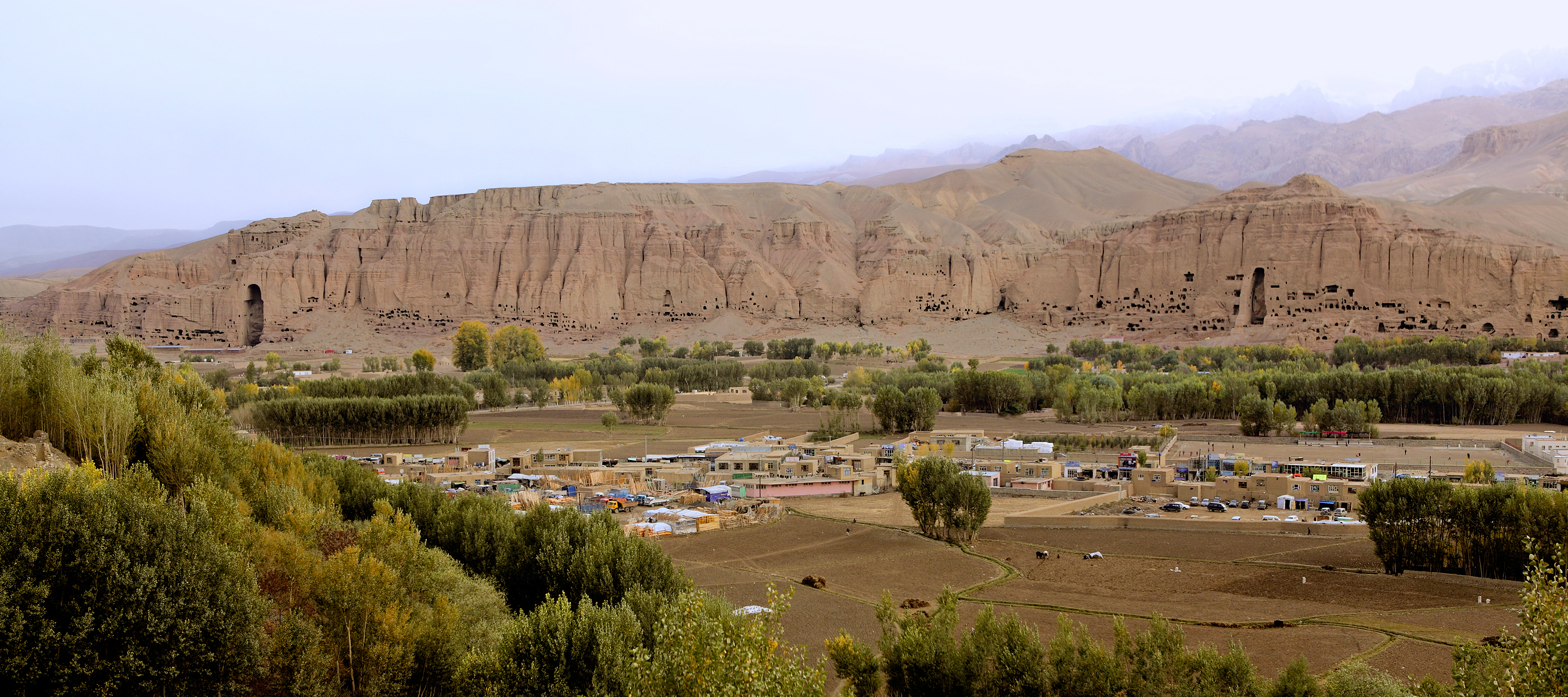
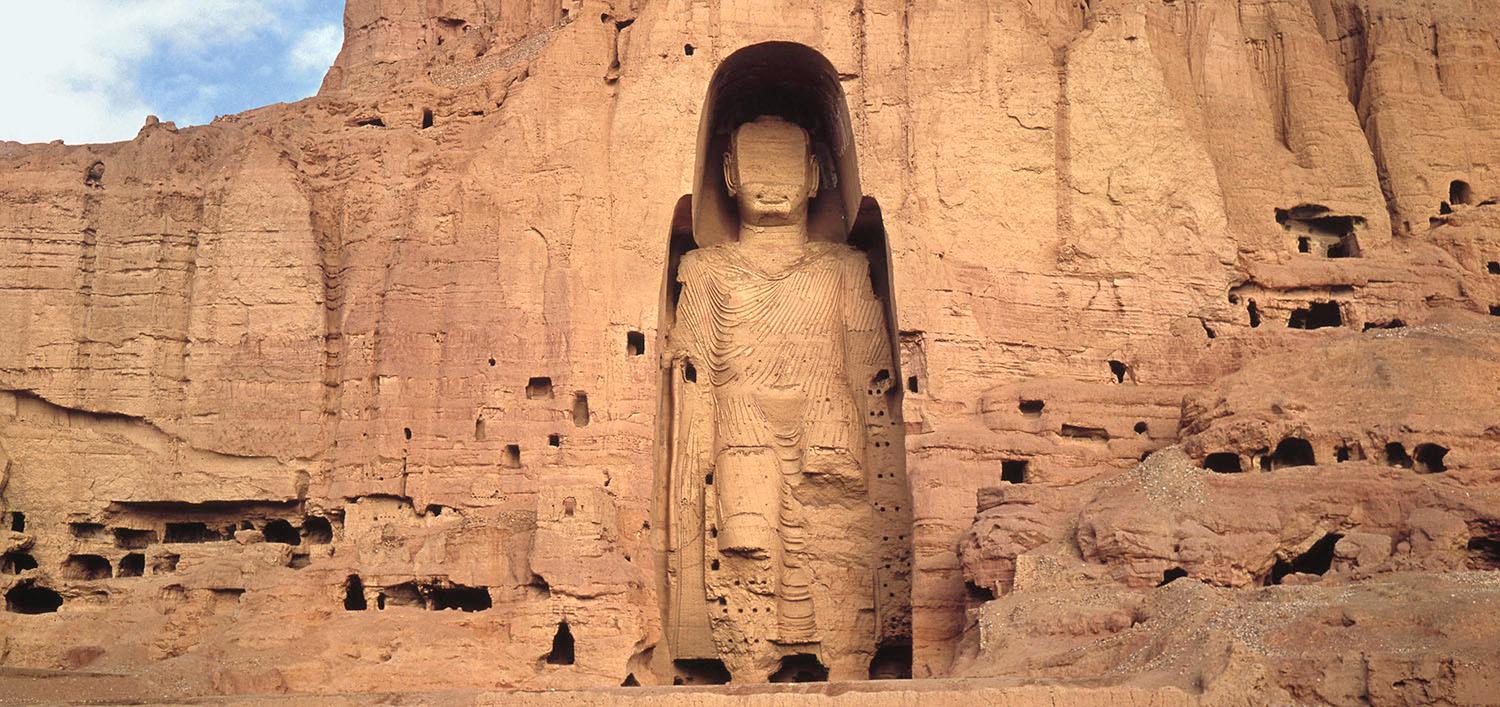
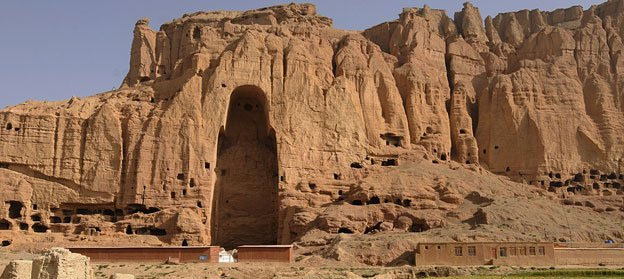
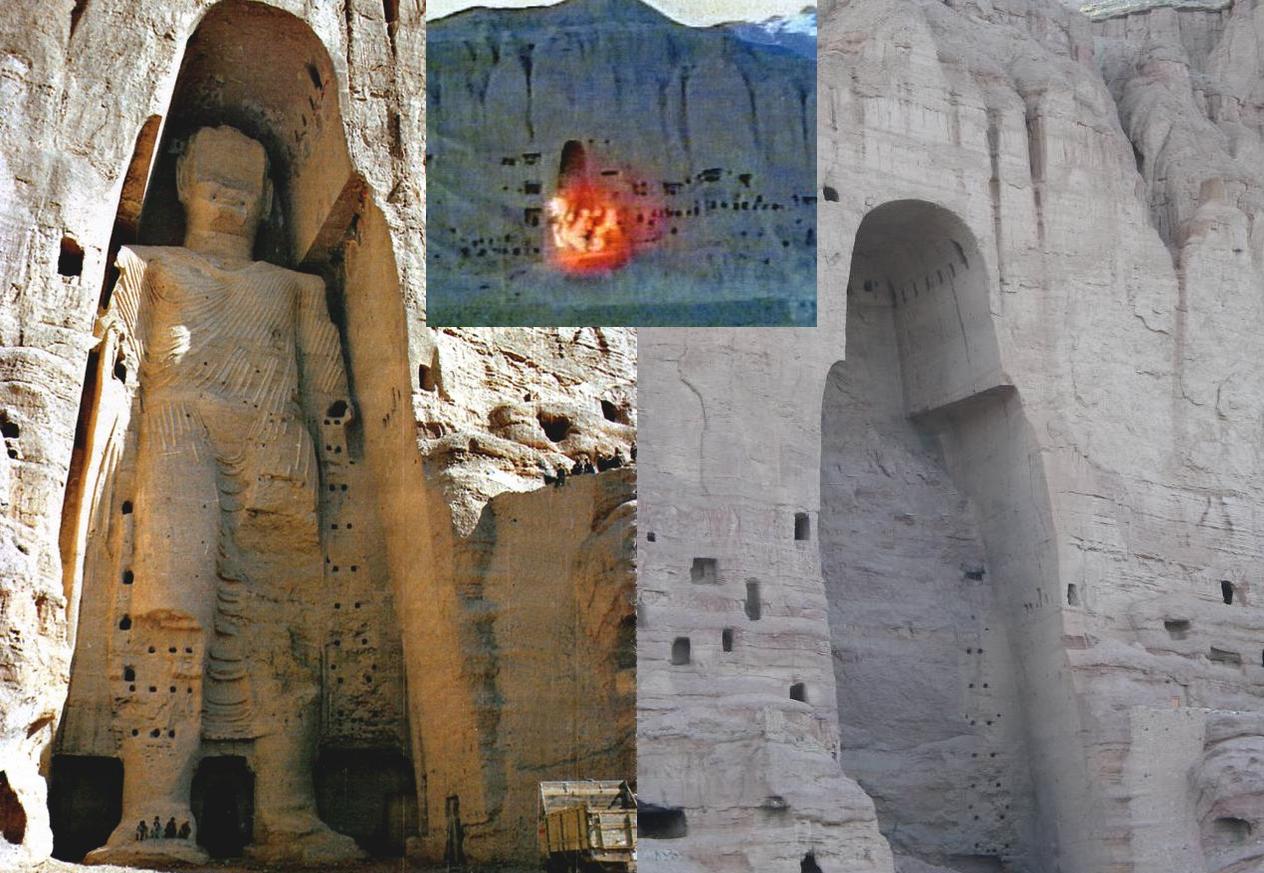
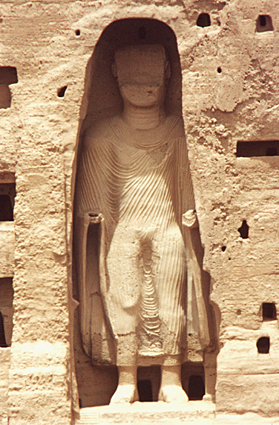
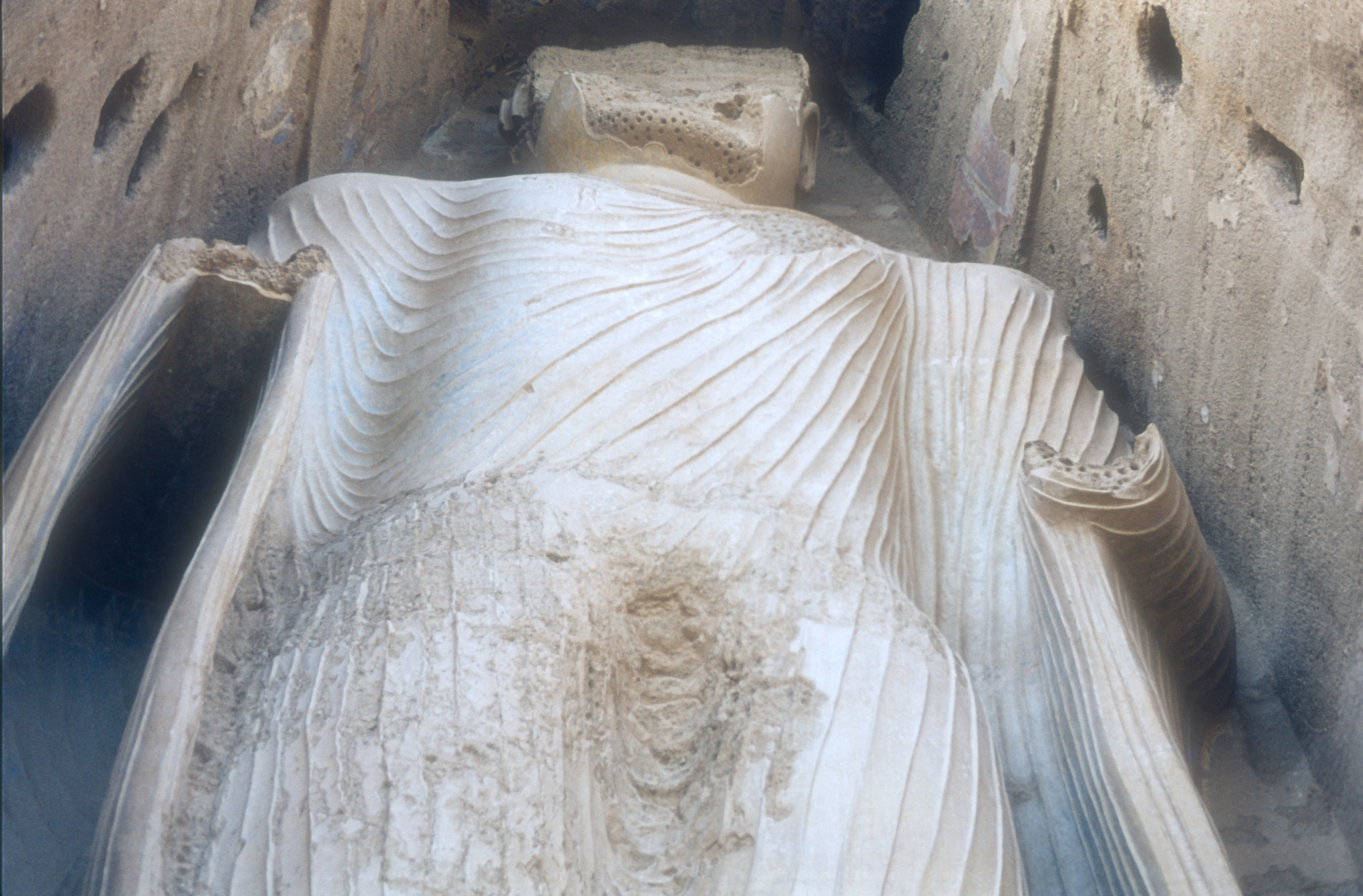
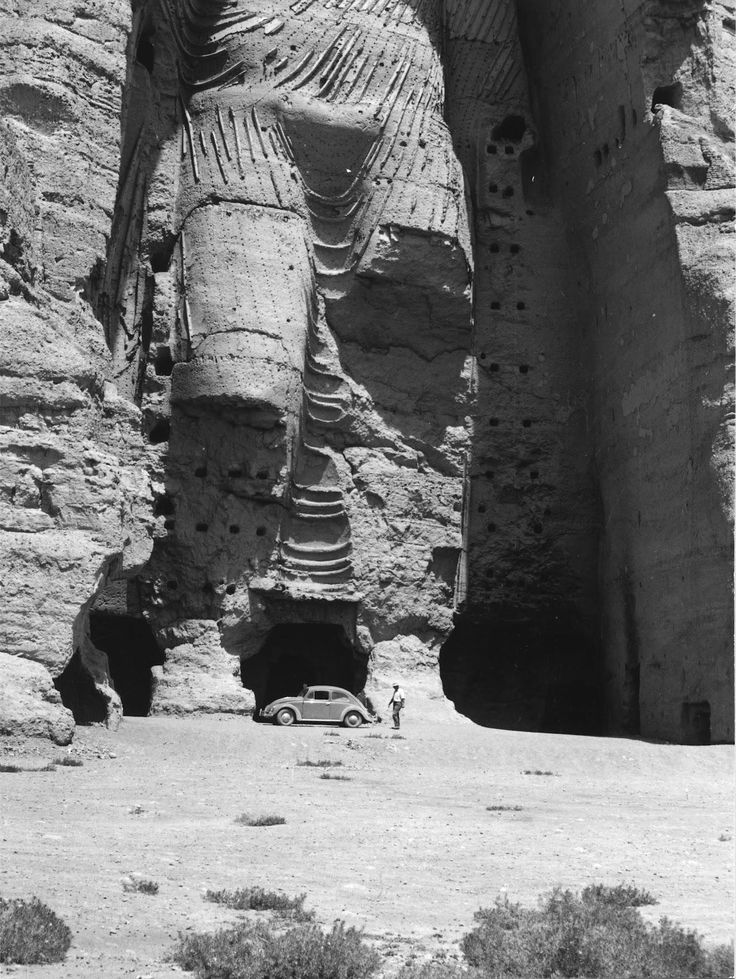
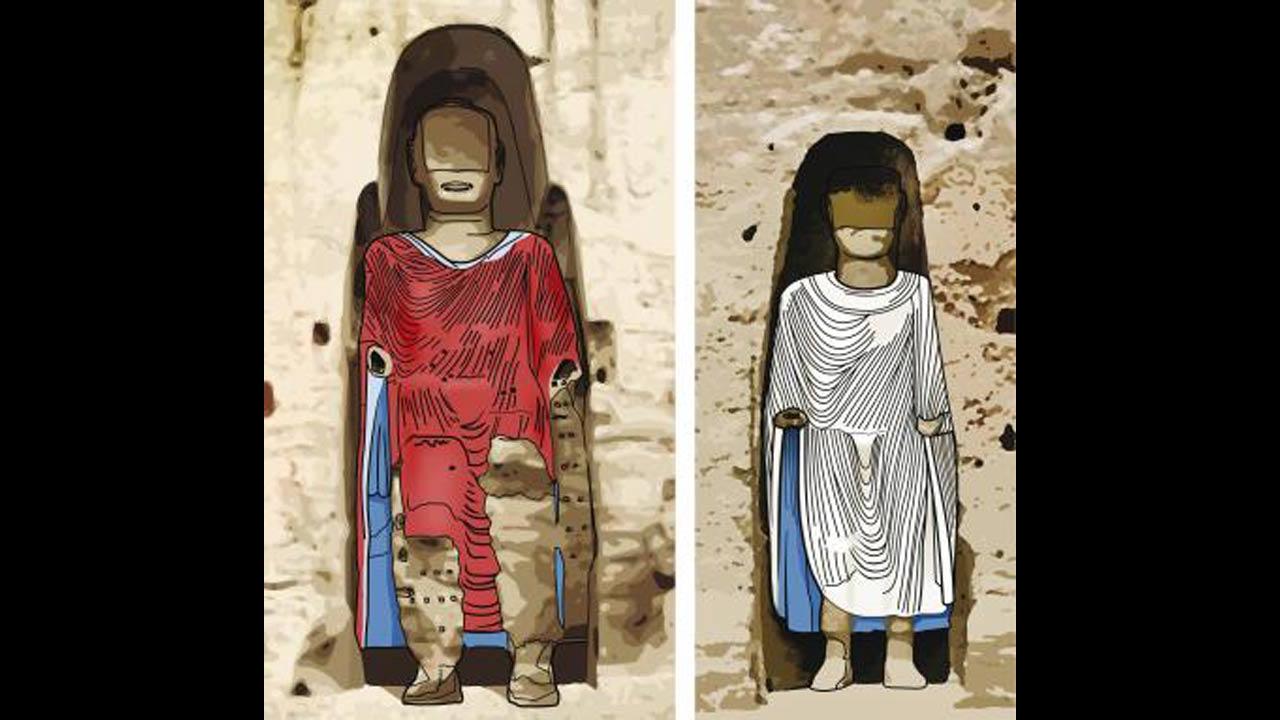
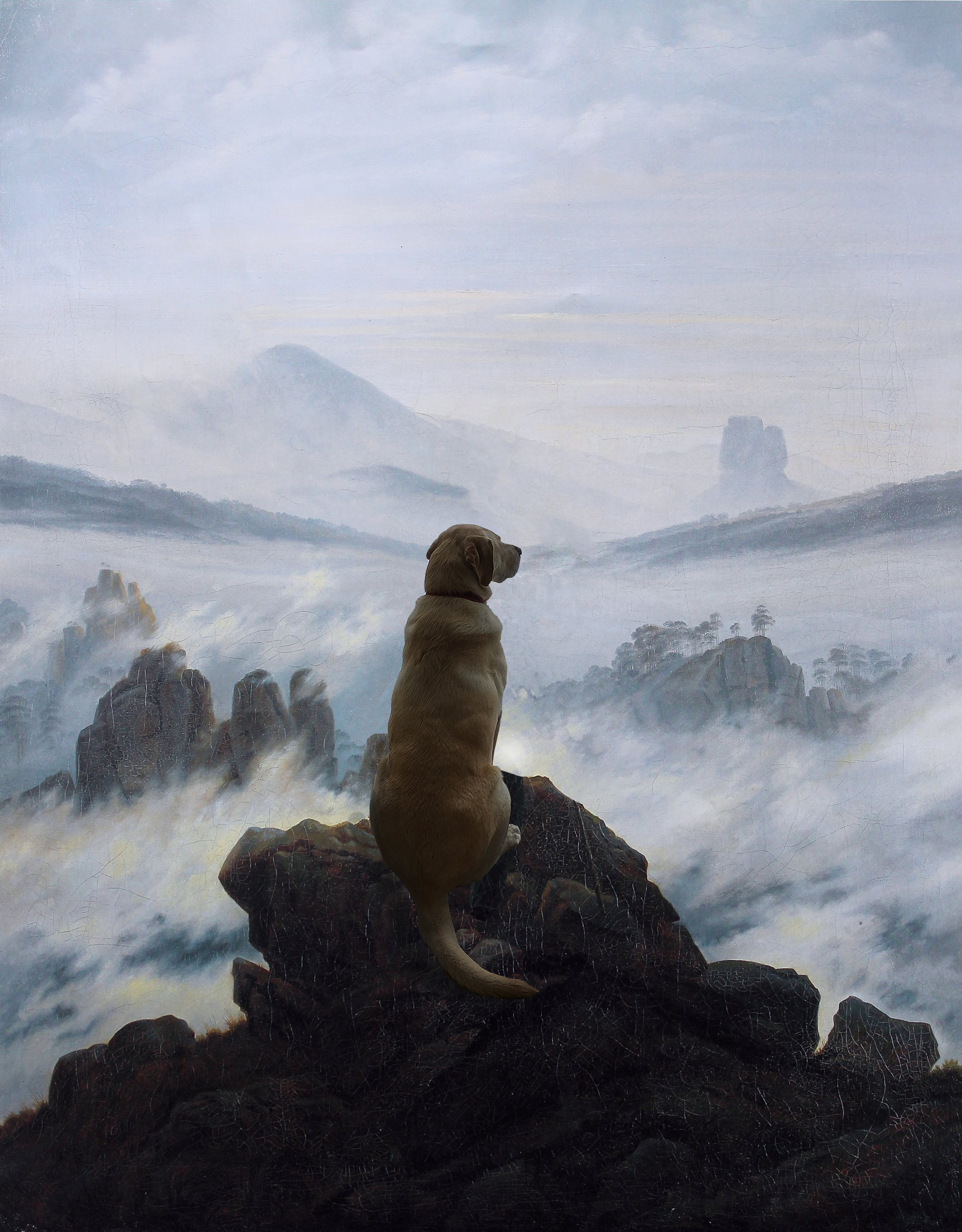
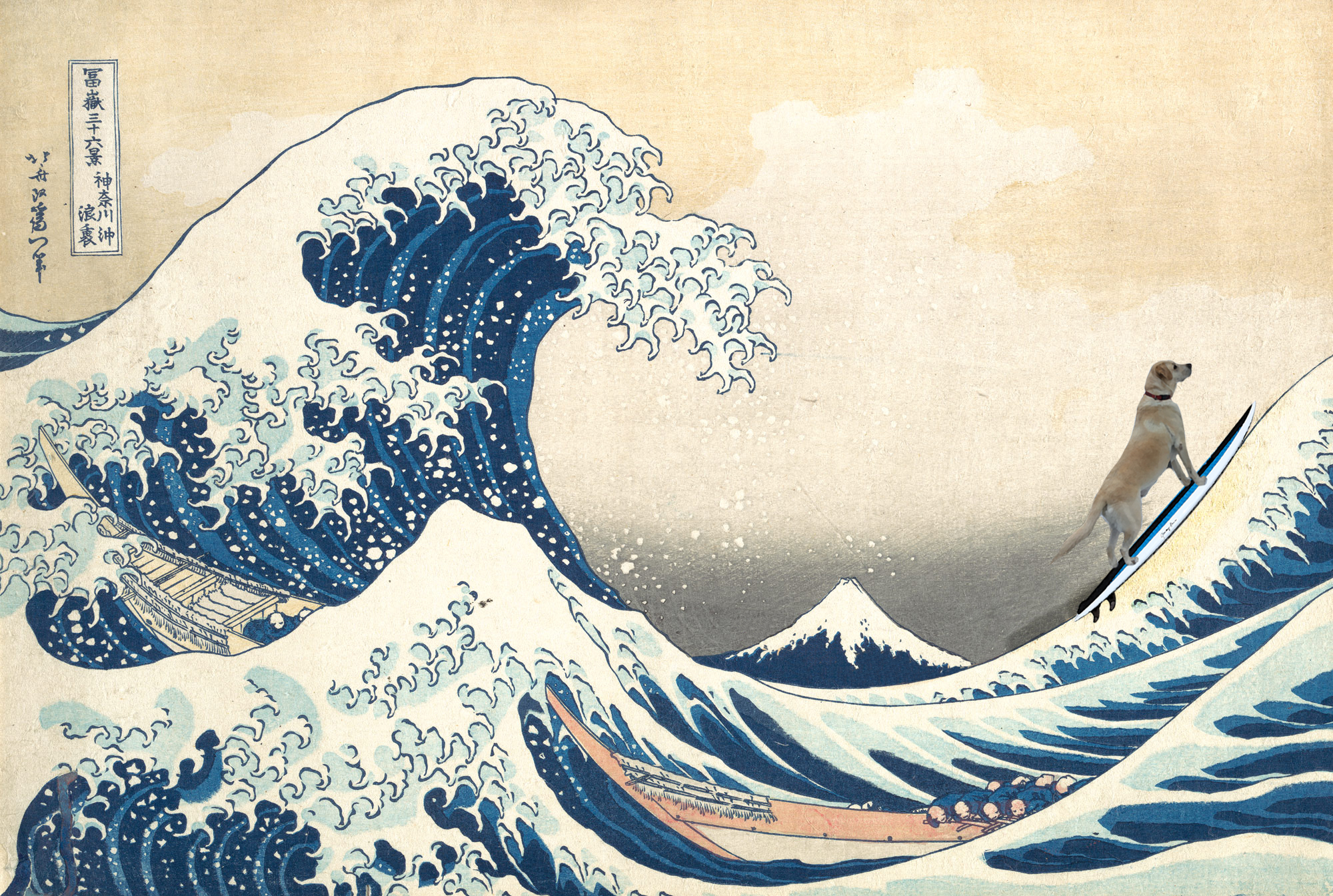
A wide view of Bamiyan Valley in Afghanistan. [Image source: Afghan Embassy in London]Western Bamiyan Buddha (Vairocana?), pre-2001 [Image credit: Afghan Embassy in London]Empty niche of the Western Bamiyan Buddha (Vairocana?), post-2001 [Image credit: Afghan Embassy in London]Before, During, and After [Image credit: Meros]Eastern Bamiyan Buddha (Saykamuni?), 1974 [Image credit: Dr. Volker Thewalt]Detail of Eastern Bamiyan Buddha (Sakyamuni?), 1975 [Image credit: Pierre Le Bigot]1958 photograph of a German construction worker and his VW Beetle beneath the feet of the Western Bamiyan Buddha (Vairocana?) [Image credit: Edmund Melzl, reproduced in Morgan, pg. 14]Artist’s rendering of possible coloration of the Bamiyan Buddhas [Image credit: design by Arnold Metzinger, sourced from Science Mag]Gus Content:Gus above the Sea and FogOriginal: Caspar David Friedrich, Wanderer above the Sea and Fog, 1817, in the collection of the Hamburger Kunsthalle in Hamburg, Germany.Gus Rides the WaveOriginal: Katsushika Hokusai, The Great Wave at Kanagawa from Hokusai’s Series of Thirty-Six Views of Mount Fuji, ca. 1830-32, a woodblock print with impressions in various collections. For an example, see the Metropolitan Museum of Art in New York, NY.Original: Elisabeth Vigee Le Brun, Portrait of Marie Antoinette, 1778, in the collection of the Kunsthistorisches Museum in Vienna, Austria.
Thanks so much for listening to the podcast and making your way to the website!
Talk to you soon! -Lindsay


 Stuff about Things


![[Image credit: Afghan Embassy in London]](http://afghanistanembassy.org.uk/english/wp-content/gallery/historical-images/Buddha-Statue-after-destruction.jpg)